Project
PLAFOND
early modern texts on mural painting
Early Modern Mural Paintings
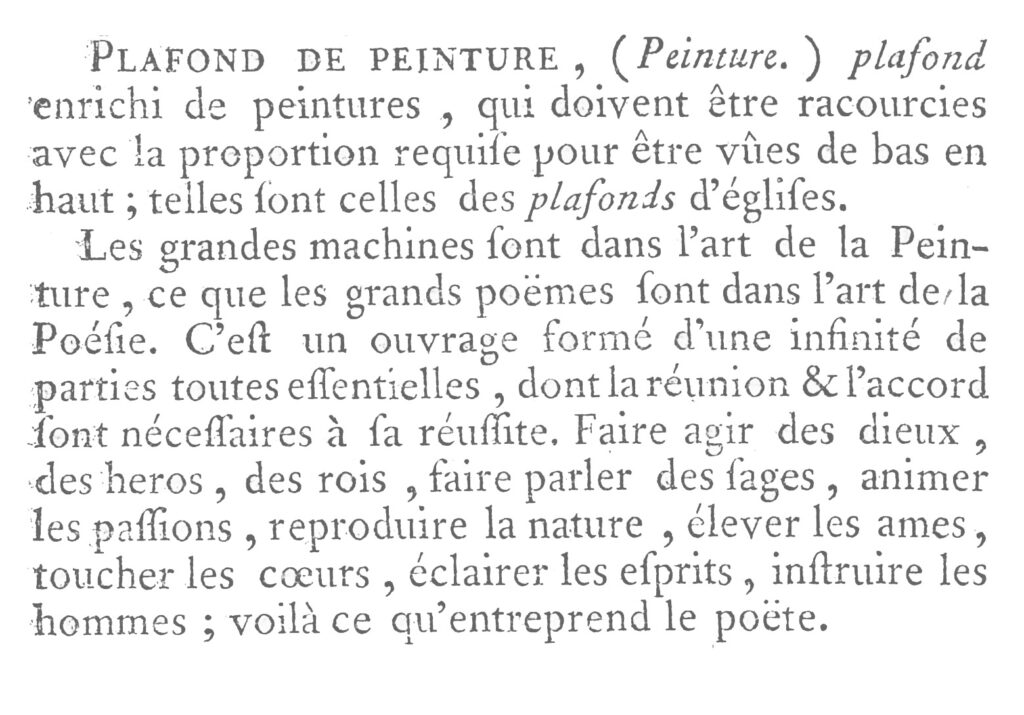
The French term “plafond” (“plat-fond”), understood as a synonym for the Italian term “soffitto”, originally denoted a flat ceiling. In the 18th century, however, its meaning broadened and it came to be used for ceilings and vaults decorated with paintings and stuccoes. The term also spread beyond the borders of France. For this reason, we have chosen it as the title of our web project.
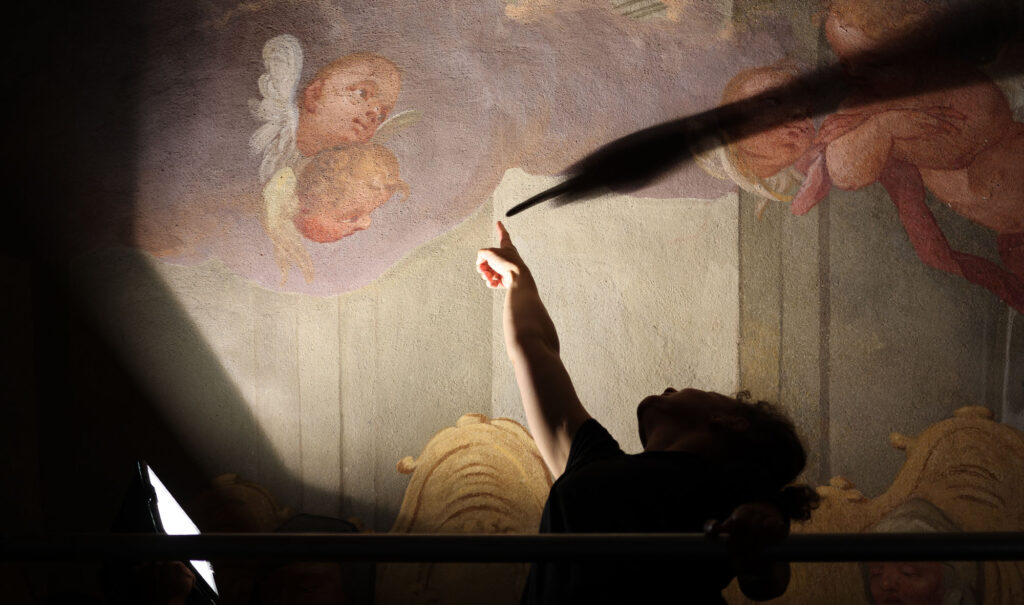
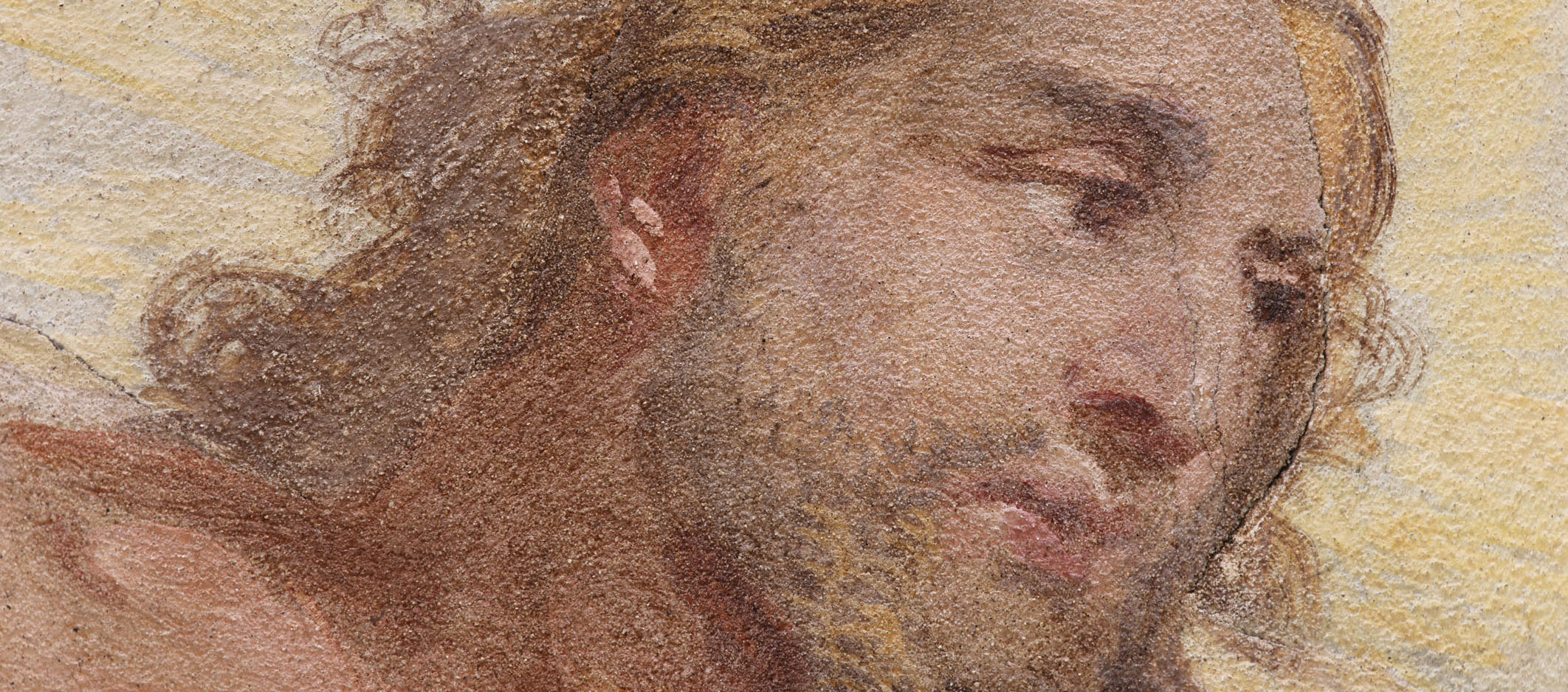
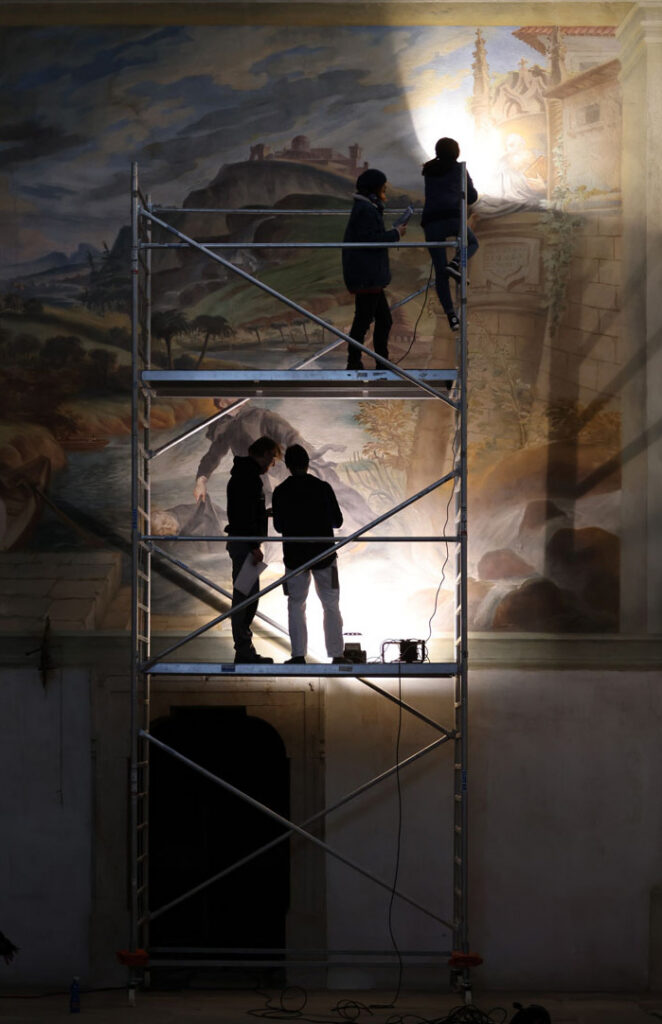
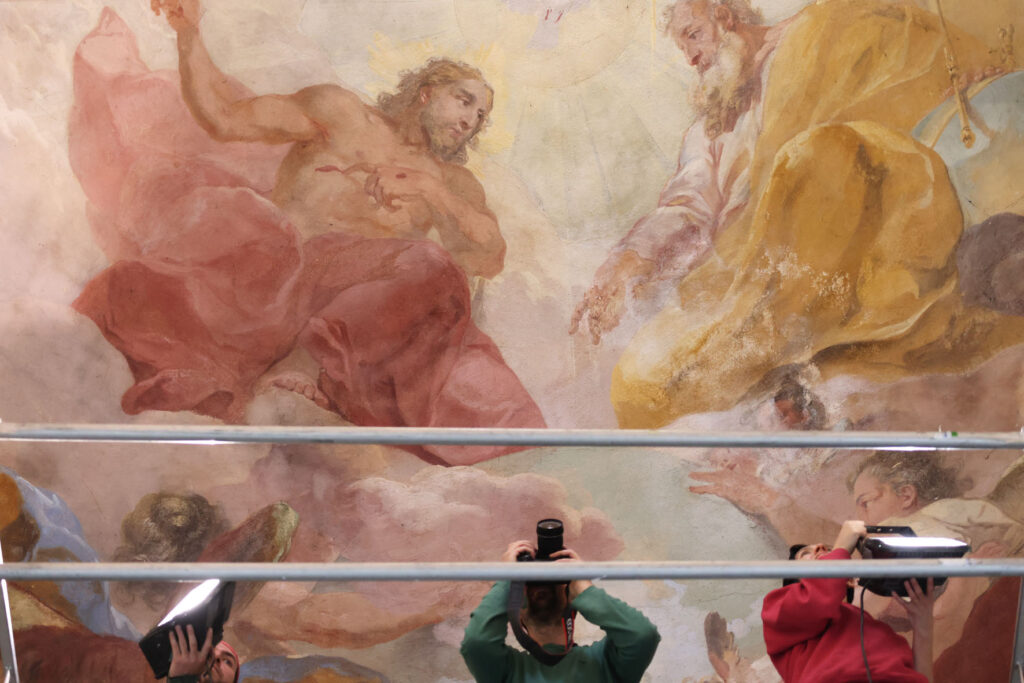
Wall and ceiling painting represents a significant, distinctive, and often endangered component of Europe’s cultural heritage. Wall paintings are defined as paintings executed on inorganic supports (cf. the ICOMOS Principles for the Preservation and Conservation-Restoration of Wall Paintings, 2003). In the early modern period, this refers primarily to paintings executed on lime plaster on walls, vaults, and plastered wooden ceilings. A great many wall paintings from this era were created using the fresco technique – consequently, by the 18th century, fresco had already become synonymous with monumental painting (cf. Dossie 1758). However, in addition to fresco, Renaissance and Baroque painters also regularly used tempera and oil techniques. In their simplest sense, wall and ceiling paintings are a structural and chromatic treatment of a building’s surface. Perspective compositions, in a sophisticated way, shape and modify the actual three-dimensional architecture. Well-considered iconographic programs then imbue both sacred and secular architecture with specific meanings, in relation to its particular function.
Plafond Project
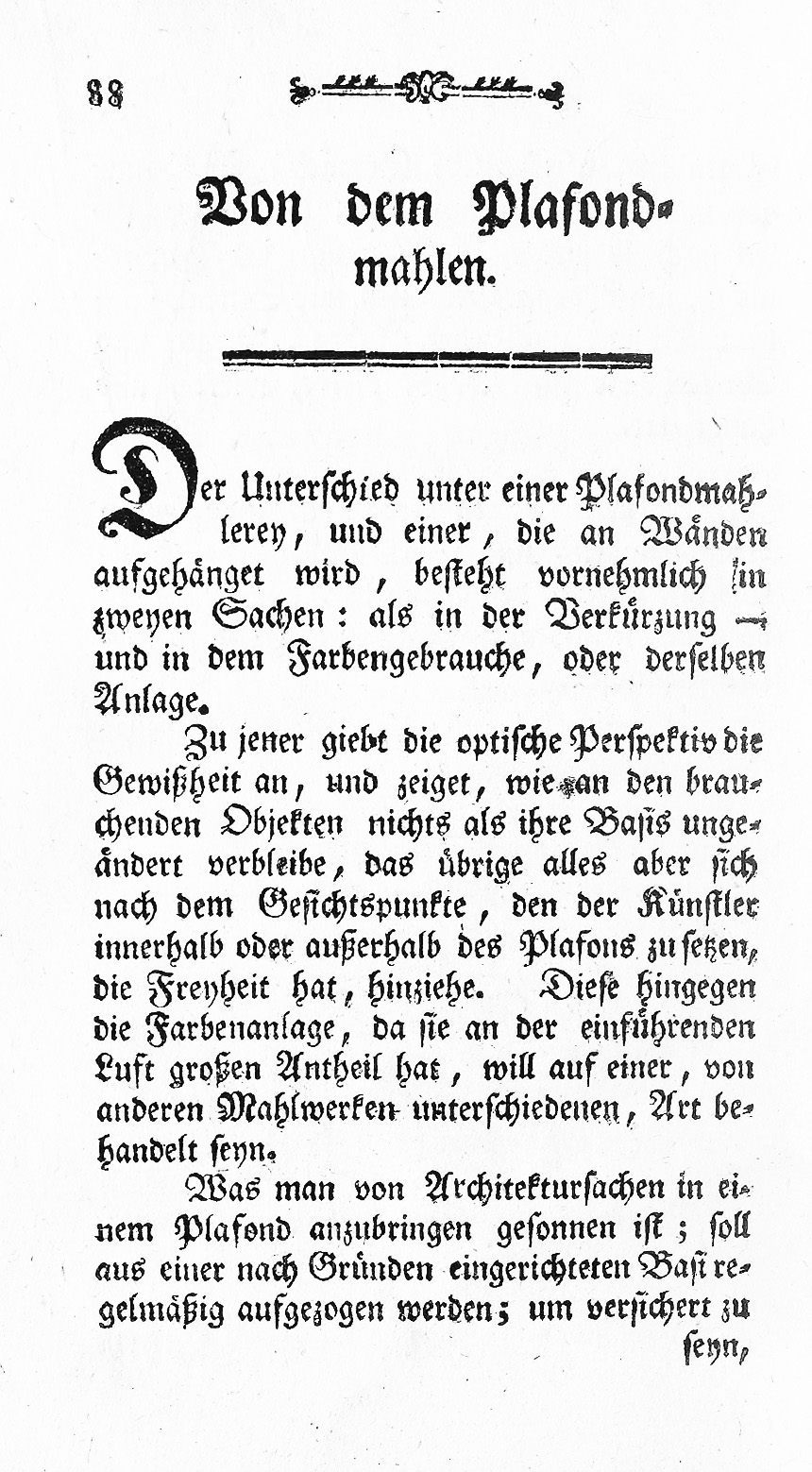
This research examines (Central) European wall and ceiling painting of the early modern period (16th–18th centuries), proceeding from the premise that a close reading of historical texts is fundamental to understanding these works. PLAFOND.QUIRIN-LEXIKON.art is a collection of historical texts exploring the multifaceted world of early modern European wall and ceiling painting. Sourced from a wide range of linguistic and cultural backgrounds, the collection features manuscript and printed treatises, recipe books, technical manuals, dictionaries and encyclopedias, scholarly journals and proceedings, as well as archival sources from the 15th to the early 19th centuries. The presented excerpts provide a period insight into historical workshop practices, artistic techniques, design processes, and perspective projection, as well as the tools and materials — such as lime, pigments, and binders — used to create these monumental artworks.
In selecting historical texts, we aim to cover primarily the following general thematic areas:
- Techniques of mural painting (fresco, tempera, oil)
- Lime plasters and their constituents (limestone, lime, sand)
- Pigments and colours (natural and artificial pigments for fresco painting, pigments for other mural painting techniques, preparation of colours)
- Tools and equipment (scaffolding, brushes, palettes, etc.)
- Preparatory drawings (sketches, models, cartoons)
- Perspective projection and quadratura
- Iconography
- History and theory of art
- Conservation and restoration of murals
The project does not aim to compile biographical data. However, it does include, among other things, historical biographical sketches and excerpts from biographies that provide information on techniques, working methods, materials, tools, or, for example, the social status of artists.
In certain instances, the relationship of the selected texts to murals may appear less direct. This applies, for example, to writings concerned with the sources and processing of materials such as lime or pigments, or to more general theoretical considerations. Nonetheless, these texts constitute an integral component of the discourse on mural painting.
The collected texts are intended primarily for art historians, material scientists, conservators, heritage professionals, and all those engaged with early modern art. The project, by contrast, does not aspire to contribute to the field of linguistic research.
Alongside the study of historical texts, our research is dedicated to the art-historical, conservation, and technological investigation of mural paintings in situ. Central to our approach is the conviction that works of art must be examined from multiple perspectives – historical, material, and interpretative – in order to be fully understood. This interdisciplinary perspective forms the foundation of our project and guides our ongoing research.
Our project is progressive and open. The entries are progressively expanded, edited, cross-referenced, and commented upon. We invite you to contact our team (see Contacts) should you be interested in contributing texts, corrections, suggestions, or comments.
Editorial Principles
The texts included in the anthology are prepared through a combination of manual transcription and Optical Character Recognition (OCR). The editorial workflow involves several stages: initial correction by an art historian, refinement using AI tools (such as ChatGPT and Google AI Studio), and a final expert review prior to publication.
In publishing these documents, we generally employ transliteration while maintaining original orthography with minimal intervention. Exceptions are made for the correction of obvious typographical errors. Certain characters have been systematically modernized; specifically, the long “ſ” is replaced with the modern “s.” Furthermore, we adjust the use of “v” and “u” based on phonetic context, as is standard when transcribing older Latin, Italian, and French texts (e.g., the original vna is rendered as una, uolta as volta, etc.). We also expand scribal abbreviations (e.g., in Italian, con instead of cō, distanza instead of distāza).
Despite our rigorous editorial standards, minor errors may persist. We therefore recommend that researchers always consult the original prints or digital facsimiles for critical study. Should you encounter any inaccuracies, we would appreciate it if you could bring them to our attention.
Website Structure
On the Catalogue page, the navigation bar provides tools for sorting posts alphabetically or chronologically, either in ascending or descending order. Records can also be filtered according to the main thematic areas, by place and date of publication, and by the editors of individual entries:
An overview of all categories is available on the Index page:
For more structured filtering of records by category, we recommend using the menu on the navigation bar.
More specific thematic areas (e.g., lime kiln, smalt, ochre, etc.) are assigned tags, which likewise allow posts to be filtered. An overview of tags is available on the Index page.
The website also supports full-text search (see the magnifying glass icon in the upper right corner of the toolbar).
The website was developed using the WordPress platform and the Kadence WP theme. The catalogue entries (i.e. the selected texts) are presented on the website in alphabetical order, from the earliest to the most recent. The order of the entries in the catalogue can be adjusted.
Baroque Ceiling Painting between Theory and Praxis
(Czech Science Foundation)
Presented materials were largely compiled during the research project Baroque Ceiling Painting: Between Theory and Praxis (a joint project of the Institute of Art History, Czech Academy of Sciences, the Department of Art History at Masaryk University, and the Faculty of Restoration, University of Pardubice), with funding from the Czech Science Foundation (reg. No. 21-13208S).
BCPCE
The launch of this web project is scheduled for 2025–2026, coinciding with the 20th anniversary of the International Research Group for Baroque Ceiling Painting in Central Europe (BCPCE).
Project Partners
The project involves the collaboration of researchers from the following institutions: